


Top Pick
Comfy Cubs
Baby Safety Gate
- Highlights
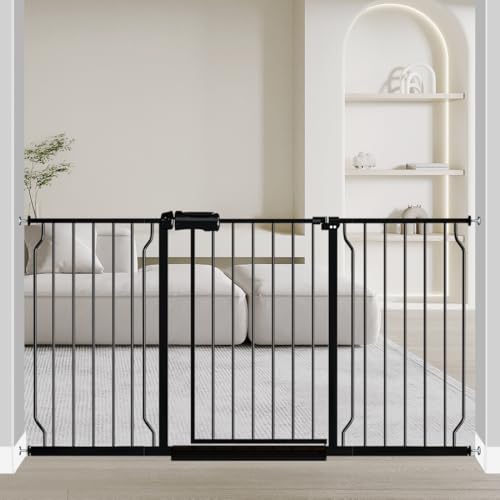
- Pressure mounted, 42 in wide, Walk-through door
8.8
Performance score
010
Where to buy
- AmazonSee price
Pros
- Installs in under 30 minutes without tools, and multiple people found it worked well in tricky spaces like uneven walls, baseboards, and round staircase railings.
- Auto-close kicks in when the gate is partially opened, but opening it all the way locks it in place for easy back-and-forth traffic.
- The latch is simple for adults but difficult for toddlers to figure out, and one person noted a secondary lock for kids who outsmart the first.
- Feels heavy and solid with no wobble; holds up against repeated tugging and pulling from toddlers and pets.
- Includes extension pieces and curved adapters for round railings, so it fits a range of openings without extra purchases.
- Easy to relocate between rooms without a complicated reinstall process.
Cons
- Even when the gate is open, there's a bar across the floor that can be a trip hazard and blocks you from rolling things through.
- A few people wished the bars were spaced a bit closer together.
- Pressure-mounted steel gate that works for both kids and pets, so it pulls double duty in households with both.
- Comes with three extensions to adjust the width, letting it fit doorways, hallways, and wider openings without needing a separate gate for each spot.
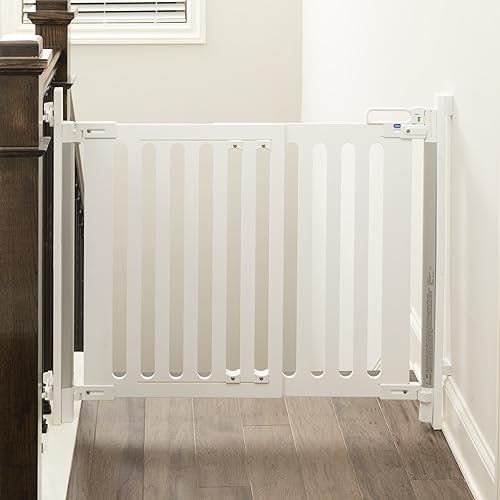
- If you're shopping for non-toxic baby gates with a powder-coated finish, this one comes in five colors (sage, black, blush, white, pacific blue) rather than the standard white-only options most gates offer.
- Comfy Cubs is run by two dads raising five kids between them; the broader line focuses on affordable nursery basics made from materials like organic bamboo and muslin, though this gate is steel construction.
- Q195 Steel
- Powder-Coated Finish