
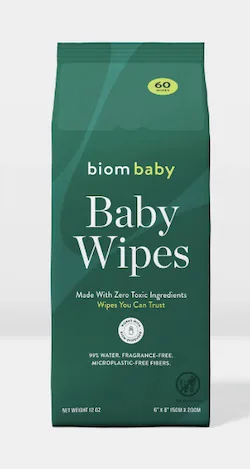
Certifications
Free From
Highlights
Hypoallergenic
Fragrance-free
No synthetic fragrance
Refillable
Recycled materials
Wet wipes
Scented
As an Amazon Associate, we earn from qualifying purchases. Affiliate links do not affect our ratings. Learn more.
We vetted baby wipes against the Welpr Standard and here are our top picks.

Cofounder & Product Curator

Medical Reviewer, PhD
Here's what we look for:

On Welpr, terms like "non-toxic," "safer," "cleaner," "healthier," and "vetted" are editorial labels based on our own standard for product assessment. They are not guarantees, certifications, or medical claims. Learn more.
The 80/20 guide to going non-toxic the easy way.

Mustela
Meets the Welpr Standard
on Amazon
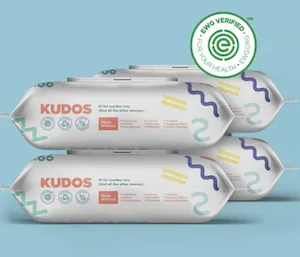
Kudos
Meets the Welpr Standard
WELPRon Kudos
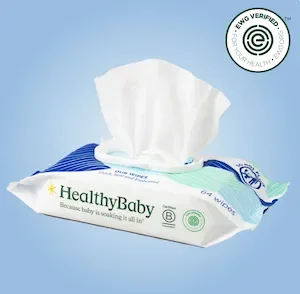
HealthyBaby
Meets the Welpr Standard
on HealthyBaby

Whoopsie
Meets the Welpr Standard
on Amazon

Joonya
Meets the Welpr Standard
on Amazon

Terra Organics
Meets the Welpr Standard
on Amazon

The Honest Company
Meets the Welpr Standard
on Amazon
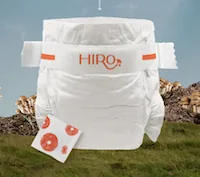
HIRO
Meets the Welpr Standard
WELPRon HIRO
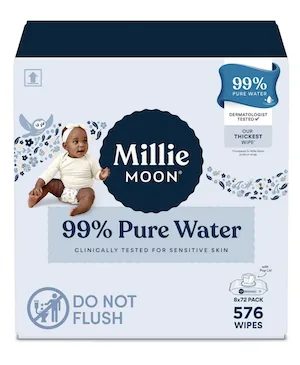
Millie Moon
Fails the Welpr Standard
on Target
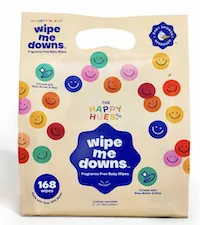
Happy Hues
Fails the Welpr Standard
on Target
Here's how to swap to non-toxic baby wipes:
Baby wipes touch your baby's skin multiple times a day, often on sensitive areas like the diaper region and face. Because babies have thinner skin and are still developing, what those wipes are made of is worth a close look.
Flip your wipes package over and look at the ingredient list and material description. You want to see a short, simple list — ideally water and cotton with minimal additives.
If you're not ready to switch right away, there are a few simple ways to reduce what your baby is exposed to with the wipes you already have.
The cleanest baby wipes are made with pure cotton and water. If a preservative is included, sodium benzoate is a safe, simple option. Avoid wipes with synthetic fragrance, chlorine, or dyes.
Cofounder & Product Curator
Camille May is the co-creator of Welpr and a guide for clean living. After selling her last company in the health food space, she went non-toxic while working to heal an autoimmune condition....
Medical Reviewer, PhD
Olushola M. Awoyemi (aka Shola) is a board-certified toxicologist and a research scientist with a PhD in Environmental Toxicology. Shola's long-term ambition is to be recognized as a world-renowned expert in toxicology,...


