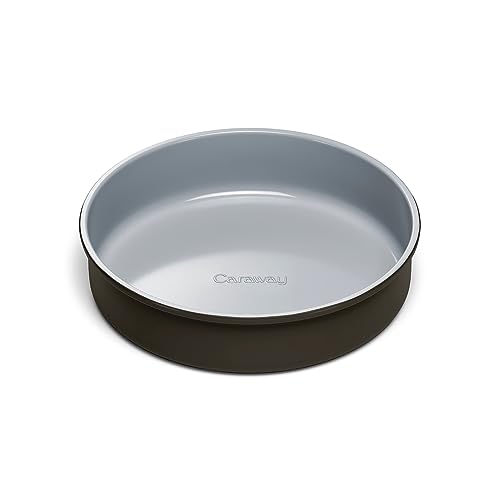

E-far
Cake Pan (8", Set of 3)
Est. Price$17.99
9.1
Performance
Ingredient Safety
Meets the Welpr Standard
Buy Now
on Amazon
Free From
Highlights
Dishwasher safe
Food-contact safe
Round
8 in
Nonstick
As an Amazon Associate, we earn from qualifying purchases. Affiliate links do not affect our ratings. Learn more.
We vetted cake pans against the Welpr Standard and here are our top picks.
Cofounder & Product Curator

Medical Reviewer, PhD
Here's what we look for:

On Welpr, terms like "non-toxic," "safer," "cleaner," "healthier," and "vetted" are editorial labels based on our own standard for product assessment. They are not guarantees, certifications, or medical claims. Learn more.
E-far
Meets the Welpr Standard
on Amazon
The 80/20 guide to going non-toxic the easy way.

Emile Henry
Meets the Welpr Standard
on Amazon

Lodge
Meets the Welpr Standard
on Amazon

Hestan
Meets the Welpr Standard
on Amazon

GreenPan
Meets the Welpr Standard
on Amazon

Anchor Hocking
Meets the Welpr Standard
on Amazon

360 Cookware
Meets the Welpr Standard
on Amazon
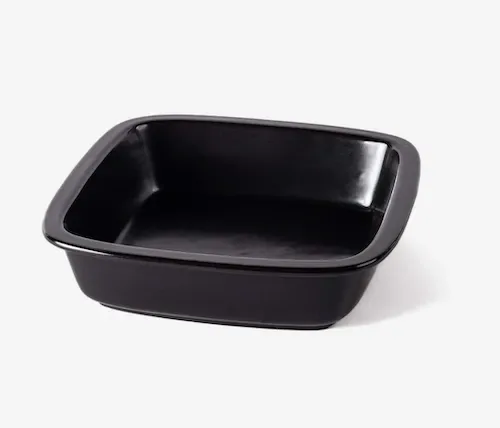
Xtrema
Meets the Welpr Standard
WELPRon Xtrema
Here's how to swap to non-toxic cake pans:
The material your cake pan is made of matters because it's in direct contact with food at high temperatures for extended periods. Heat can cause certain materials to leach into what you're baking, so the construction and coating of your pan are worth paying attention to.
Look at the materials and coatings on your current cake pans. Flip them over or check the original packaging or product listing for details on what they're made of.
If you're not ready to replace your cake pans right away, a few simple adjustments can reduce direct contact between food and the pan surface.
When you're ready for a new cake pan, look for options made from stainless steel, glass, cast iron, stoneware, or ceramic that has been tested free of lead and cadmium. These materials are non-reactive and hold up well at baking temperatures.
Cofounder & Product Curator
Camille May is the co-creator of Welpr and a guide for clean living. After selling her last company in the health food space, she went non-toxic while working to heal an autoimmune condition....
Medical Reviewer, PhD
Olushola M. Awoyemi (aka Shola) is a board-certified toxicologist and a research scientist with a PhD in Environmental Toxicology. Shola's long-term ambition is to be recognized as a world-renowned expert in toxicology,...