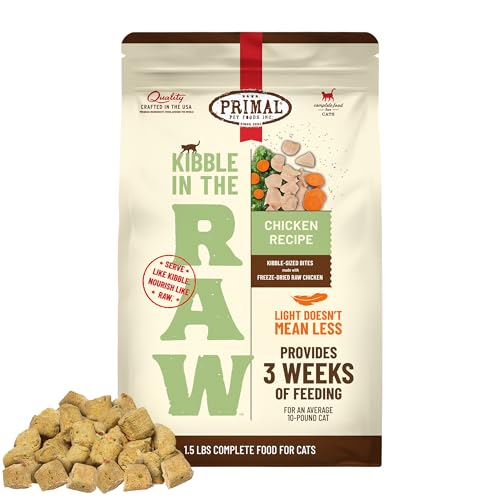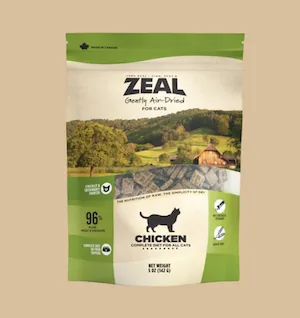

Highlights
Made in USA
Freeze-dried
For All life stages
Grain-free
As an Amazon Associate, we earn from qualifying purchases. Affiliate links do not affect our ratings. Learn more.
We vetted cat food against the Welpr Standard and here are our top picks.

Cofounder & Product Curator

Medical Reviewer, PhD
Here's what we look for:

On Welpr, terms like "non-toxic," "safer," "cleaner," "healthier," and "vetted" are editorial labels based on our own standard for product assessment. They are not guarantees, certifications, or medical claims. Learn more.
The 80/20 guide to going non-toxic the easy way.

Raw Paws
Meets the Welpr Standard
on Amazon
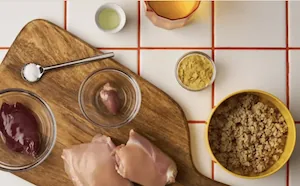
Smalls
Meets the Welpr Standard
on Smalls
Here's how to swap to non-toxic cat food:
Welpr looks at what's actually in your cat's food — the ingredients, how it's processed, and where those ingredients come from. Since cats eat the same food every single day, the quality of that food adds up over time.
Flip over your cat's food bag or can and read through the ingredient list. Look for real, whole food ingredients you can recognize, and note anything that seems unfamiliar or heavily processed.
Switching cat food takes time — cats can be picky, and sudden changes may upset their stomachs. If you're not ready to replace what you have, a gradual transition works well.
Look for cat food with simple, real food ingredient lists — ideally human-grade, minimally processed, and free from artificial additives. Sourcing matters too: organic, pasture-raised, or grass-fed proteins are a step up.
Cofounder & Product Curator
Camille May is the co-creator of Welpr and a guide for clean living. After selling her last company in the health food space, she went non-toxic while working to heal an autoimmune condition....
Medical Reviewer, PhD
Olushola M. Awoyemi (aka Shola) is a board-certified toxicologist and a research scientist with a PhD in Environmental Toxicology. Shola's long-term ambition is to be recognized as a world-renowned expert in toxicology,...