

Cosori
Food Dehydrator
Est. Price$139.96
9.1
Performance
Ingredient Safety
Meets the Welpr Standard
Buy Now
on Amazon
Free From
Highlights
Dishwasher safe
Food-contact safe
2 year warranty
6 trays
Digital control
Built-in timer
As an Amazon Associate, we earn from qualifying purchases. Affiliate links do not affect our ratings. Learn more.
We vetted food dehydrators against the Welpr Standard and here are our top picks.

Cofounder & Product Curator

Medical Reviewer, PhD
Here's what we look for:

On Welpr, terms like "non-toxic," "safer," "cleaner," "healthier," and "vetted" are editorial labels based on our own standard for product assessment. They are not guarantees, certifications, or medical claims. Learn more.
Cosori
Meets the Welpr Standard
on Amazon
The 80/20 guide to going non-toxic the easy way.

Magic Mill
Meets the Welpr Standard
on Amazon

Biltong Boss
Meets the Welpr Standard
on Amazon

Vevor
Meets the Welpr Standard
on Amazon

LEM Products
Meets the Welpr Standard
on Amazon
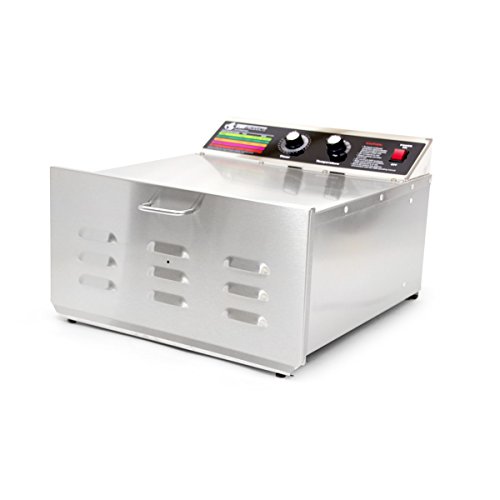
TSM Products
Meets the Welpr Standard
on Amazon

STX International
Meets the Welpr Standard
on Amazon
Here's how to swap to non-toxic food dehydrators:
Food dehydrators use low, steady heat over many hours to dry food. That extended heating time means the materials inside — especially the trays where food sits — matter more than you might expect. Welpr focuses on what those food-contact surfaces are made of and whether they can release anything into your food during long drying sessions.
Check what your dehydrator trays are made of. Look at the product manual, original packaging, or the manufacturer's website for material details. Focus on the parts that actually touch your food.
If your dehydrator has plastic trays or nonstick coatings you're unsure about, a few simple changes can reduce direct contact between food and those surfaces. Replacing a dehydrator isn't always practical right away, so these steps can help in the meantime.
Look for a dehydrator with stainless steel trays, since stainless is sturdy, non-reactive, and handles extended heat safely. Avoid models where plastic or nonstick-coated trays are the main food-contact surface.
Cofounder & Product Curator
Camille May is the co-creator of Welpr and a guide for clean living. After selling her last company in the health food space, she went non-toxic while working to heal an autoimmune condition....
Medical Reviewer, PhD
Olushola M. Awoyemi (aka Shola) is a board-certified toxicologist and a research scientist with a PhD in Environmental Toxicology. Shola's long-term ambition is to be recognized as a world-renowned expert in toxicology,...