

Kitchen Aid
Tilt-Head Stand Mixer
Est. Price$399
9.2
Performance
Ingredient Safety
Meets the Welpr Standard
Buy Now
on Amazon
Highlights
EU safety standards
Dishwasher safe
Food-contact safe
Tilt-head
4.5 qt
275W
As an Amazon Associate, we earn from qualifying purchases. Affiliate links do not affect our ratings. Learn more.
We vetted kitchen stand mixers against the Welpr Standard and here are our top picks.

Cofounder & Product Curator

Medical Reviewer, PhD
Here's what we look for:

On Welpr, terms like "non-toxic," "safer," "cleaner," "healthier," and "vetted" are editorial labels based on our own standard for product assessment. They are not guarantees, certifications, or medical claims. Learn more.
Kitchen Aid
Meets the Welpr Standard
on Amazon
The 80/20 guide to going non-toxic the easy way.
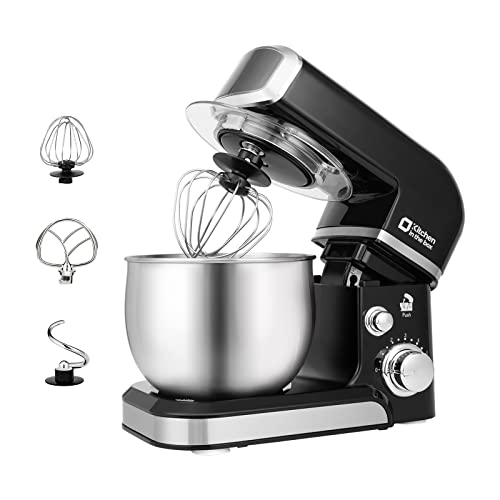
Kitchen In The Box
Meets the Welpr Standard
on Amazon

Kitchen Aid
Meets the Welpr Standard
on Amazon

ZACME
Meets the Welpr Standard
on Amazon

LEEVOT
Meets the Welpr Standard
on Amazon
Here's how to swap to non-toxic kitchen stand mixers:
Stand mixers are built from a mix of materials, and some of those materials come into direct contact with your food. Welpr focuses on what the bowl, attachments, and any coatings are made of, since these are the surfaces your ingredients actually touch during mixing, kneading, and whipping.
Look at the bowl and attachments that came with your stand mixer. The goal is to identify what materials are touching your food. Stainless steel and glass are ideal, while plastic bowls or plastic-coated attachments deserve a closer look.
If your mixer has a plastic bowl or plastic-coated attachments, you can reduce direct food contact while you plan a replacement. Small adjustments can make a meaningful difference.
Look for a stand mixer with a stainless steel bowl and stainless steel attachments. These are non-reactive, durable, and one of the safest materials for food contact. If any plastic is present, it should be BPA-free and limited to parts that don't touch food, like the housing or speed dial.
Cofounder & Product Curator
Camille May is the co-creator of Welpr and a guide for clean living. After selling her last company in the health food space, she went non-toxic while working to heal an autoimmune condition....
Medical Reviewer, PhD
Olushola M. Awoyemi (aka Shola) is a board-certified toxicologist and a research scientist with a PhD in Environmental Toxicology. Shola's long-term ambition is to be recognized as a world-renowned expert in toxicology,...