

Certifications
Free From
Highlights
Cruelty-free
Fragrance-free
Money-back guarantee
Powder
Standard
HE compatible
As an Amazon Associate, we earn from qualifying purchases. Affiliate links do not affect our ratings. Learn more.
We vetted laundry detergents against the Welpr Standard and here are our top picks.

Cofounder & Product Curator

Medical Reviewer, PhD
Here's what we look for:

On Welpr, terms like "non-toxic," "safer," "cleaner," "healthier," and "vetted" are editorial labels based on our own standard for product assessment. They are not guarantees, certifications, or medical claims. Learn more.
The 80/20 guide to going non-toxic the easy way.

Dirty Labs
Meets the Welpr Standard
on Amazon
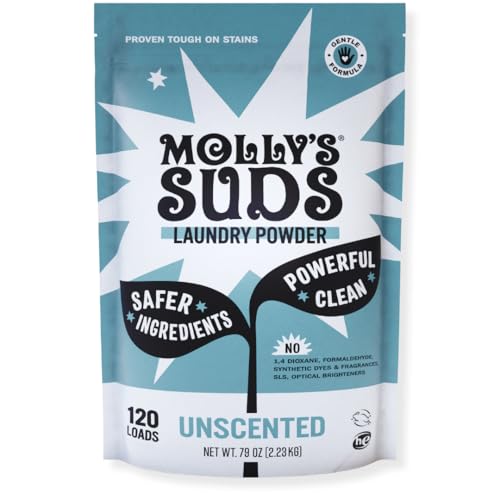
Molly's Suds
Meets the Welpr Standard
on Amazon

Meliora Cleaning Products
Meets the Welpr Standard
on Amazon

Pronounce
Meets the Welpr Standard
on Amazon

Blueland
Meets the Welpr Standard
on Amazon

Rebel Green
Meets the Welpr Standard
on Amazon
Here's how to swap to non-toxic laundry detergents:
Laundry detergent touches almost every fabric that sits against your skin — clothes, bedding, towels, and underwear. Because residues stay in the fibers after washing, what's in your detergent matters more than you might expect.
Take a look at your current detergent's label or product page. Many conventional detergents use vague terms like "fragrance" or "cleaning agents" without listing what's actually inside. Welpr values full transparency — if a brand won't disclose its ingredients, that's a red flag.
If you're not ready to switch yet, a couple of simple changes can reduce how much residue ends up on your fabrics. This is especially worth doing for items that touch your skin the most, like underwear, sheets, and baby clothes.
The best laundry detergents use simple, fully disclosed plant-based formulas. Look for fragrance-free options or ones scented only with essential oils or fully disclosed, third-party certified safe fragrances.
Cofounder & Product Curator
Camille May is the co-creator of Welpr and a guide for clean living. After selling her last company in the health food space, she went non-toxic while working to heal an autoimmune condition....
Medical Reviewer, PhD
Olushola M. Awoyemi (aka Shola) is a board-certified toxicologist and a research scientist with a PhD in Environmental Toxicology. Shola's long-term ambition is to be recognized as a world-renowned expert in toxicology,...

