

Certifications
Free From
Highlights
Cruelty-free
EU safety standards
Fragrance-free
No synthetic fragrance
Refillable
For All hair types
Detangling
Spray formula
As an Amazon Associate, we earn from qualifying purchases. Affiliate links do not affect our ratings. Learn more.
We vetted leave in conditioners against the Welpr Standard and here are our top picks.

Cofounder & Product Curator

Medical Reviewer, PhD
Here's what we look for:

On Welpr, terms like "non-toxic," "safer," "cleaner," "healthier," and "vetted" are editorial labels based on our own standard for product assessment. They are not guarantees, certifications, or medical claims. Learn more.
The 80/20 guide to going non-toxic the easy way.

Dr. Bronner's
Meets the Welpr Standard
on Amazon

Ecoslay's
Meets the Welpr Standard
on Amazon

Griffin Remedy
Meets the Welpr Standard
on Amazon

Yarok
Meets the Welpr Standard
on Amazon
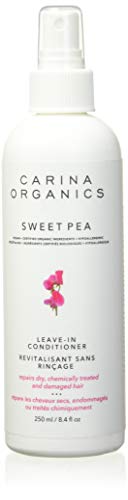
Carina Organics
Meets the Welpr Standard
on Amazon
Carina Organics
Meets the Welpr Standard
on Amazon
Here's how to swap to non-toxic leave in conditioners:
Leave-in conditioner stays on your hair and skin for hours, which means your body has more time to absorb whatever is in the formula. Many conventional leave-in conditioners contain synthetic fragrances, harsh preservatives, and unnecessary additives that can build up with daily use.
Take a look at the leave-in conditioners you already own, starting with the one you reach for most often. Use the Welpr Personal Care and Cosmetic Scanner to snap a photo of the ingredient label and see what gets flagged.
If you're not ready to replace your leave-in conditioner right away, small adjustments can reduce how much contact it has with your skin. Focus on application technique to limit what stays on your scalp and body.
Look for leave-in conditioners with simple, purposeful ingredients and no synthetic fragrance. Certifications like EWG VERIFIED™ or MADE SAFE® are a good sign, but Welpr still reviews every formula individually before approving it.
Cofounder & Product Curator
Camille May is the co-creator of Welpr and a guide for clean living. After selling her last company in the health food space, she went non-toxic while working to heal an autoimmune condition....
Medical Reviewer, PhD
Olushola M. Awoyemi (aka Shola) is a board-certified toxicologist and a research scientist with a PhD in Environmental Toxicology. Shola's long-term ambition is to be recognized as a world-renowned expert in toxicology,...