
As an Amazon Associate, we earn from qualifying purchases. Affiliate links do not affect our ratings. Learn more.

Best Non-Toxic Men's Swimwear

We vetted men's swimwear against the Welpr Standard and here are our top picks.

Camille May

Camille May

Cofounder & Product Curator

Olushola M. Awoyemi

Olushola M. Awoyemi

Medical Reviewer, PhD

Here's what we look for:

  • Natural, breathable fibers like organic cotton, hemp, wool, and leather
  • Minimal use of synthetics
  • Non-toxic dyes and low-impact finishes
  • Trusted certifications like GOTS and OEKO-TEX
  • Transparent sourcing, ethical manufacturing, and full material disclosure

Best Non-Toxic Men's Swimwear

On Welpr, terms like "non-toxic," "safer," "cleaner," "healthier," and "vetted" are editorial labels based on our own standard for product assessment. They are not guarantees, certifications, or medical claims. Learn more.

Organic Basics

Organic Basics

Welpr Rating
4.9?
Est. PricePrice level 1
Buy Now

on Organic Basics

Discount Code
WELPR10
Free email mini-course

Welpr Blueprint: Go Non-Toxic Mini-Course

The 80/20 guide to going non-toxic the easy way.

No spam. Unsubscribe anytime.

Alex Crane

Alex Crane

Welpr Rating
4.7?
Est. PricePrice level 3
Buy Now

on Alex Crane

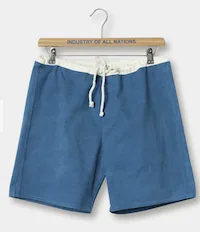
Industry of All Nations

Industry of All Nations

Welpr Rating
4.6?
Est. PricePrice level 2
Buy Now

on Industry of All Nations

Woolmark x Vilebrequin

Woolmark x Vilebrequin

Welpr Rating
4.6?
Est. PricePrice level 3
Buy Now

on Vilebrequin

How to Swap to Non-Toxic men's swimwear:

Here's how to swap to non-toxic men's swimwear:

What to know about men's swimwear

Most men's swim trunks and board shorts are made from synthetic fabrics like polyester and nylon, often treated with chemical coatings for water resistance or UV protection. Since swimwear sits directly against your skin in water and heat — which can increase absorption — the materials and finishes matter more than you might expect.

  • Welpr looks at the base fabric, any stretch fibers like spandex or elastane, dye types, and whether coatings contain PFAS or other concerning chemicals.
  • Swimwear worn frequently — for laps, beach days, or as casual shorts — deserves more attention than a pair you wear once a season.

Check what your current swimwear is made of

Look at the care label or product listing for your swim trunks to see what fabrics and finishes are used. Most conventional swimwear is 100% synthetic, but the key is knowing whether those synthetics are made responsibly and what treatments they carry.

  • Check the label for the fiber content — note if it lists polyester, nylon, elastane, or spandex, and whether the listing mentions any water-repellent or stain-resistant finish.
  • If the product page or tag doesn't mention dye type, PFAS-free construction, or any third-party certification like OEKO-TEX®, that's a sign the brand may not prioritize transparency.

Use your current swimwear more safely

Replacing swimwear isn't always immediate, especially if you have pairs that still fit well. A couple of simple steps can reduce what your skin picks up from the fabric.

  • Wash new swim trunks at least once before wearing them to help remove residual dyes and chemical finishes from manufacturing.
  • Rinse your swimwear with fresh water right after each use — this limits chemical buildup from chlorine, salt, and fabric treatments sitting against your skin.

Choose cleaner replacements

Look for swim trunks made primarily from natural fibers like hemp, organic cotton, or merino wool, or from responsibly made synthetics that are free of PFAS, BPA, and azo dyes. Brands that use low-impact or plant-based dyes and keep stretch fibers to a minimum are a good sign.

  • Prioritize brands that clearly list their materials, dye methods, and certifications like GOTS or OEKO-TEX® — vague claims like "eco-friendly" without details are worth questioning.
  • Click the button above to shop Welpr Approved men's swimwear.
Camille May

Camille May

Cofounder & Product Curator

Camille May is the co-creator of Welpr and a guide for clean living. After selling her last company in the health food space, she went non-toxic while working to heal an autoimmune condition....

Olushola M. Awoyemi

Olushola M. Awoyemi

Medical Reviewer, PhD

Olushola M. Awoyemi (aka Shola) is a board-certified toxicologist and a research scientist with a PhD in Environmental Toxicology. Shola's long-term ambition is to be recognized as a world-renowned expert in toxicology,...