

As an Amazon Associate, we earn from qualifying purchases. Affiliate links do not affect our ratings. Learn more.
Best Non-Toxic Pillows
We vetted pillows against the Welpr Standard and here are our top picks.
Here's what we look for:
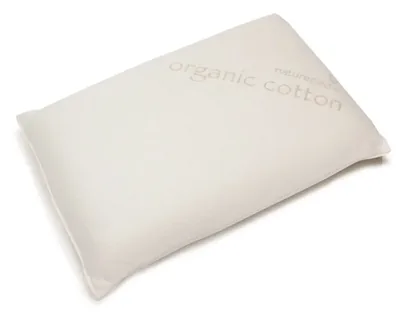
- Natural fibers and fills like organic cotton, wool, hemp, kapok, and natural latex
- No formaldehyde-releasing agents, added flame retardants, PFAS, and low-to-zero VOC
- Foam certified safe by GOLS or CertiPUR-US
- Trusted third-party certifications whenever available
- Transparent sourcing, materials, and manufacturing practices
Best Non-Toxic Pillows
On Welpr, terms like "non-toxic," "safer," "cleaner," "healthier," and "vetted" are editorial labels based on our own standard for product assessment. They are not guarantees, certifications, or medical claims. Learn more.
Welpr Blueprint: Go Non-Toxic Mini-Course
The 80/20 guide to going non-toxic the easy way.
How to Swap to Non-Toxic pillows:
Here's how to swap to non-toxic pillows:
What to know about pillows
Your pillow is pressed against your face for hours every night, making it one of the closest-contact products you own. What it's made of matters — both the outer fabric and the fill inside can introduce synthetic materials, chemical treatments, or off-gassing into your breathing zone.
- Many conventional pillows use polyester fill, synthetic fabric covers, or foam treated with flame retardants — materials worth understanding since they sit right next to your nose and mouth all night.
- Even pillows marketed as "hypoallergenic" or "cooling" can be made entirely from synthetic materials, so the label claims don't always tell the full story.
Check the pillows you already have
Look at the care tag or product label on your current pillows to see what they're made of. Focus on both the shell fabric and the fill material, since both are in direct contact with you or very close to your face.
- Check the tag for fill material first — look for terms like "polyester fiber," "memory foam," or "gel foam," which indicate synthetic fills, versus "down," "wool," "kapok," or "natural latex."
- If your pillow has a strong chemical or "new" smell, that can be a sign of off-gassing from synthetic foam or chemical treatments.
Use your current pillows more safely
Replacing pillows may not be in the budget right away. In the meantime, a few simple steps can reduce what you're breathing in while you sleep.
- Use a pillowcase made from untreated organic cotton or natural linen as a barrier between your face and a synthetic pillow.
- If you have a new foam pillow, unwrap it and let it air out in a well-ventilated room for a few days before sleeping on it.
Choose cleaner replacements
Look for pillows made with natural materials throughout — both the outer shell and the fill. Organic cotton, wool, down, kapok, and natural latex are all fills that meet Welpr's standards when paired with a natural-fiber cover.
- Prioritize certifications like GOTS, OEKO-TEX®, MADE SAFE®, or GREENGUARD Gold, but also check that the brand is transparent about exactly what's inside — certifications alone aren't the full picture.
- Click the button above to shop Welpr Approved pillows.

Camille May
Cofounder & Product Curator
Camille May is the co-creator of Welpr and a guide for clean living. After selling her last company in the health food space, she went non-toxic while working to heal an autoimmune condition....

Olushola M. Awoyemi
Medical Reviewer, PhD
Olushola M. Awoyemi (aka Shola) is a board-certified toxicologist and a research scientist with a PhD in Environmental Toxicology. Shola's long-term ambition is to be recognized as a world-renowned expert in toxicology,...