



Top Pick
LITTLE Bot
Ofie Mat
- Free From
- BPA Free, Flame Retardant Free, Formaldehyde Free, Heavy Metal Free, Lead Free, Phthalate Free
- Highlights
- Foam mat, Reversible design, Waterproof
9.1
Performance score
010
Where to buy
- AmazonSee price
Pros
- Cushioning absorbs impact well enough to protect babies who topple over, even though the mat is only about half an inch thick.
- Cleans up fast with a damp cloth or wet wipes; being one piece means fewer crumbs trapped underneath compared to interlocking tile mats.
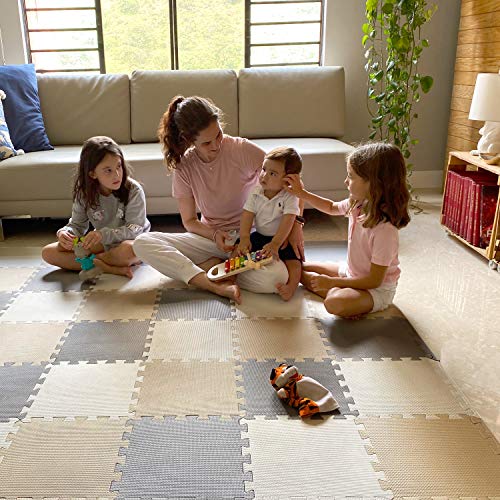
- Blends into living spaces without looking like baby gear; multiple people say guests mistake it for a rug.
- One reviewer reported the mat still looks and feels like new after four years of daily use, with no permanent indentations even under furniture legs.
Cons
- Slides on hard floors and feels slippery underfoot with socks on; multiple people flagged this as a problem on wood and tile.
- Several people reported the surface flaking, developing holes, or tearing within three to six months of regular use.
- If placed on the opposite side from how it was rolled, the mat curls up at the edges and can take days of weighting or reverse-rolling to flatten.
- Unexplained surface staining can appear even without spills, and color consistency varies between mats ordered at different times.
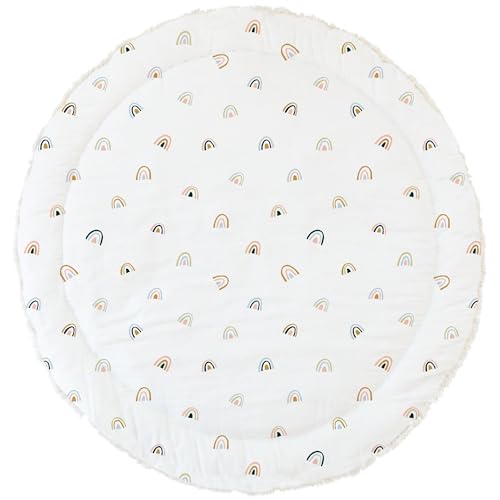
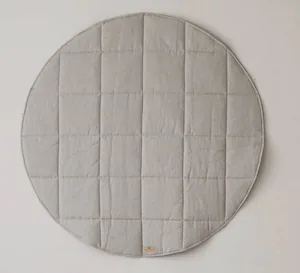
- Single-piece foam mat with reversible sides, so you get two different patterns without buying two mats. Each side has a neutral, minimalist design intended to blend into living spaces rather than scream "playroom.".
- Made from TPU foam (thermoplastic polyurethane), which is the material difference that makes this a non-toxic play mat. Most budget foam mats use EVA or PVC; TPU avoids those entirely.
- Soft and cushioned but not squishy. The surface is scratch-resistant, which is why the brand markets it as pet-friendly too.
- Rolls up for storage but should never be folded, as folding causes permanent creasing. New mats may arrive with creases from shipping that flatten out within about a week at room temperature.
- Started as a side project by two parents in Calgary's oil and gas industry in 2016. The design side is led by co-founder Jaclyn, who shaped the neutral, home-decor-friendly aesthetic. Mats are manufactured in China.
- Tpu