

Free From
Highlights
Made in USA
8 in
Nonstick
Induction compatible
As an Amazon Associate, we earn from qualifying purchases. Affiliate links do not affect our ratings. Learn more.
We vetted skillets against the Welpr Standard and here are our top picks.

Cofounder & Product Curator

Medical Reviewer, PhD
Here's what we look for:

On Welpr, terms like "non-toxic," "safer," "cleaner," "healthier," and "vetted" are editorial labels based on our own standard for product assessment. They are not guarantees, certifications, or medical claims. Learn more.
The 80/20 guide to going non-toxic the easy way.

de Buyer
Meets the Welpr Standard
on Amazon

FINEX
Meets the Welpr Standard
on Amazon

Heritage Steel
Meets the Welpr Standard
on Amazon

Our Place
Meets the Welpr Standard
on Amazon

Hestan
Meets the Welpr Standard
on Amazon

Staub
Meets the Welpr Standard
on Amazon

Our Place
Meets the Welpr Standard
on Amazon

GreenPan
Meets the Welpr Standard
on Amazon

Hestan
Meets the Welpr Standard
on Amazon
Hestan
Meets the Welpr Standard
on Amazon
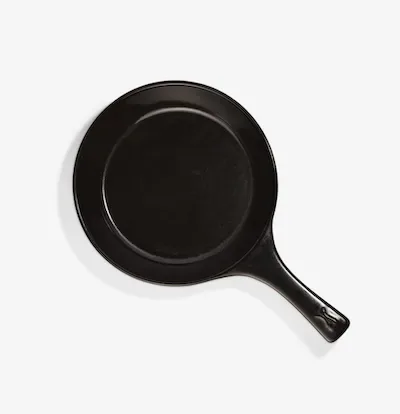
Xtrema
Meets the Welpr Standard
WELPRon Xtrema
Here's how to swap to non-toxic skillets:
The material your skillet is made of matters because it's in direct contact with your food at high temperatures. Some coatings and materials can release chemicals into food during cooking, especially when heated. Welpr focuses on what the cooking surface is made of, whether coatings are truly safe, and whether the skillet avoids PFAS entirely.
Check what your current skillets are made of by looking at the bottom of the pan, the original packaging, or the manufacturer's website. Pay special attention to any nonstick skillets since the coating is what touches your food directly.
If you're not ready to replace a nonstick skillet right away, how you use it can make a difference. Small changes in temperature and care can help reduce what transfers into your food.
The best skillets are made from simple, non-reactive materials with no synthetic nonstick coatings. Stainless steel and cast iron are top choices because they're durable, naturally safe at high heat, and can last a lifetime.
Cofounder & Product Curator
Camille May is the co-creator of Welpr and a guide for clean living. After selling her last company in the health food space, she went non-toxic while working to heal an autoimmune condition....
Medical Reviewer, PhD
Olushola M. Awoyemi (aka Shola) is a board-certified toxicologist and a research scientist with a PhD in Environmental Toxicology. Shola's long-term ambition is to be recognized as a world-renowned expert in toxicology,...

