

Living Libations
Everybody Loves The Sunshine Body Oil
Est. Price$47
8.4
Performance
Ingredient Safety
Meets the Welpr Standard
Buy Now
on Amazon
Free From
Highlights
Vegan
Cruelty-free
Recyclable packaging
Refillable
As an Amazon Associate, we earn from qualifying purchases. Affiliate links do not affect our ratings. Learn more.
We vetted tanning oils against the Welpr Standard and here are our top picks.

Cofounder & Product Curator

Medical Reviewer, PhD
Here's what we look for:

On Welpr, terms like "non-toxic," "safer," "cleaner," "healthier," and "vetted" are editorial labels based on our own standard for product assessment. They are not guarantees, certifications, or medical claims. Learn more.
Living Libations
Meets the Welpr Standard
on Amazon
The 80/20 guide to going non-toxic the easy way.
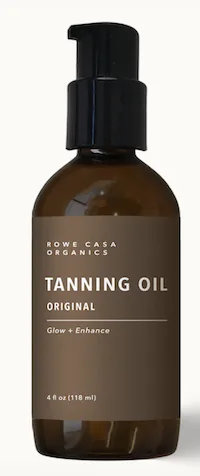
Rowe Casa Organics
Meets the Welpr Standard
on Rowe Casa Organics

ALOESUN
Meets the Welpr Standard
on Amazon

Tanning Club
Meets the Welpr Standard
on Amazon
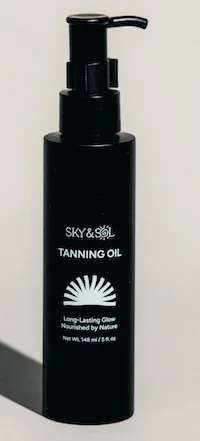
Sky and Sol
Meets the Welpr Standard
on Sky and Sol
Here's how to swap to non-toxic tanning oils:
Tanning oil is designed to stay on your skin for extended periods, often in direct sunlight across large areas of your body. That combination of long skin contact, wide coverage, and frequent reapplication means the formulation deserves a close look.
Grab any tanning oils you currently use and scan the ingredient labels with the Welpr Personal Care and Cosmetic Scanner. It will flag ingredients that don't meet Welpr's standards so you can see exactly where your product stands.
If you're not ready to replace your tanning oil right away, small adjustments can reduce how much your skin absorbs. This is especially worth doing with products you use on hot days when pores are more open.
Look for tanning oils with simple, plant-based formulas built around natural carrier oils like coconut, jojoba, or carrot seed oil. The fewer unnecessary additives, the better.
Cofounder & Product Curator
Camille May is the co-creator of Welpr and a guide for clean living. After selling her last company in the health food space, she went non-toxic while working to heal an autoimmune condition....
Medical Reviewer, PhD
Olushola M. Awoyemi (aka Shola) is a board-certified toxicologist and a research scientist with a PhD in Environmental Toxicology. Shola's long-term ambition is to be recognized as a world-renowned expert in toxicology,...