



Top Pick
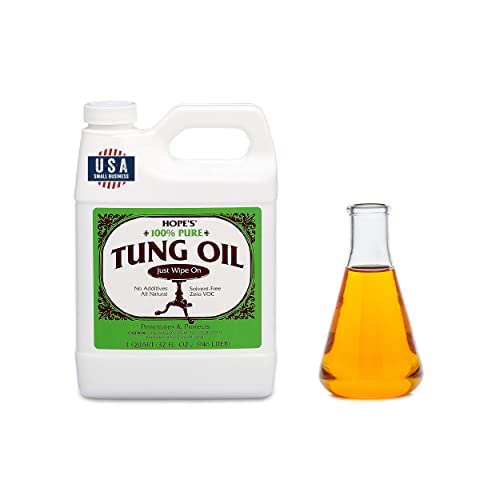
HOPE'S
100% Pure Tung Oil
- Highlights
- Oil-based, Wipe-on, Food safe when cured
9.3
Performance score
010
Where to buy
- AmazonSee price
Pros
- Brings out rich grain detail and deepens wood tone, giving pieces a warm, custom look.
- Works well on raised garden beds, outdoor furniture, window frames, and floors; versatile across wood types.
- Easy to apply with a brush or cloth, and cleanup is simple.
- A quart covers a good amount of surface area; one person coated 30-40 linear feet of wood with two coats using about two-thirds of a bottle.
Cons
- Cure time is long; expect 2-4 weeks before the finish fully hardens, and surfaces can feel oily for up to a week.
- Scent is polarizing: some find it pleasant and nutty, others describe it as strong and unpleasant, lingering for weeks after application.
- Noticeably darkens and yellows lighter woods like pine, which caught a few people off guard.
- Thick, syrupy consistency makes it harder to spread evenly compared to blended tung oil finishes.
- Instead of forming a film on the surface like polyurethane or lacquer, this oil soaks into the wood fibers and cures to a solid from within. The result is a finish that moves with the wood rather than cracking or peeling over time.
- Once cured, it's considered safe for food contact surfaces, so it works for cutting boards, butcher blocks, wooden bowls, and countertops.
- Application is simple: wipe it on and let it cure at room temperature. Multiple coats build up the finish gradually, and it produces a low-gloss, hand-rubbed look rather than a shiny or plasticky surface.
- Not limited to wood. It also penetrates and finishes concrete, brick, stone, and cast iron, which sets it apart from most non-toxic wood stain & finish options that only work on timber.
- HOPE'S has been a U.S.-based company for over 50 years. Their tung oil is sourced from growers in South America and China, and they use only premium-grade pressings from the nut.
- Tung Oil


