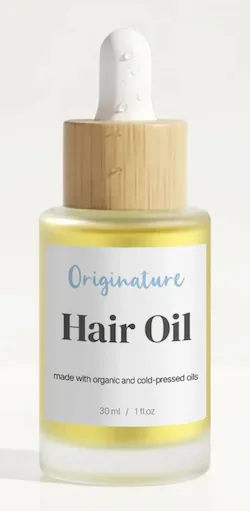
Best Non-Toxic Hair Oil in 2025


As an Amazon Associate, we earn from qualifying purchases. Our use of affiliate links does not influence how we rate products. Learn more about our affiliate policy here.
What we look for:
- Simple formulations using fully natural or safe synthetic ingredients
- No parabens, PEGs, phthalates, harsh sulfates, BHA/BHT, artificial dyes, formaldehyde or formaldehyde releasers, or undisclosed synthetic fragrance (unless certified safe)
- Minimal, necessary preservatives only
- Trusted third-party certifications when available
- Transparent sourcing, ingredients, and manufacturing practices
Common Harmful Chemicals in Hair Oil
Chemical Name
Why it’s harmful
Phthalates, linked to endocrine disruption, reproductive toxicity, and cancer, are banned in the European Union but remain prevalent in U.S. cosmetics. They are widely used in personal care products, such as nail polish, fragrances, and eyelash glue and other products. A significant loophole allows phthalates to be added to fragrances without disclosure. Health concerns include endocrine disruption, developmental and reproductive toxicity, and potential carcinogenicity.
Campaign for Safe Cosmetics: Phthalates, Product Profile: Hand Sanitizer, Phthalates in Cosmetics, Phthalates in cosmetic and personal care products: concentrations and possible dermal exposure, A Survey of Phthalates and Parabens in Personal Care Products from the United States and Its Implications for Human Exposure, Phthalates Factsheet, BPA and Phthalates: Chemicals found in our homes
Acrylamide is a man-made white crystalline solid primarily used in the production of polymers and copolymers. In humans, it is toxic and irritates the skin and mucous membranes, and can affect the central, peripheral, and autonomic nervous systems leading to symptoms like memory difficulties, confusion, slurred speech, and excessive sweating. It may cause peripheral neuropathy, resulting in loss of sensation and muscle wasting. Recovery after exposure can take months to years. Animal studies indicate acrylamide accumulates in the nervous system, liver, kidney, and male reproductive system, causing degenerative changes. It might disrupt metabolism, induce oxidative stress, cause chromosomal aberrations, and tumor initiation. There is no evidence of teratogenic effects in humans or causing cancer. It has also shown genotoxic effects in some aquatic species like C. Auratus and mussels.
Polyquaternium, modified polymers through quaternization are known for skin toxicity and allergenicity. Prolonged exposure, especially for hairdressers and janitors, may pose risks. It's found in various products, including hair conditioners, creams, and household cleaning items. Concerns include skin irritation, formaldehyde release, and contact dermatitis. Regulations in the EU limit Quaternium-15 to 0.2% in cosmetics, while the US lacks specific regulations.
Resorcinol is a white crystalline compound with various uses in areas like tanning, photography, resin manufacture, adhesives, and cosmetics. It can be used medically as an antifungal, antibacterial, and keratolytic agent, and in dermatology-related treatments, specifically for acne amongst others. Direct skin contact with the compound can cause redness, itching, dermatitis, and even corrosion of the affected area. Overexposure could lead to symptoms like irritation, dermatitis, dyspnea, drowsiness, hypothermia, and changes to spleen, kidney, and liver. Animal studies have shown that high oral doses can result in fatalities whereas smaller doses can cause changes to liver weights with no reported carcinogenic effect or mutations in Salmonella typhimurium strains.
Styrene is a colorless to yellowish, oily liquid used mainly in plastic, synthetic rubber, and resin production but also as a flavoring agent. Acute human exposure can cause irritation, drowsiness, and vertigo, with skin blistering and dermatitis resulting from long-term contact. It has been linked to increased rates of certain types of cancer, liver effects, and problems with the reproductive system. Animal studies have similarly shown irritation, central nervous system effects, and links to cancers. Styrene's endocrine disruptor activity appears negligible in humans and other vertebrates, but there is evidence of impact in certain aquatic species.
The study on 1,576 U.S. workers exposed to TiO2 for over a year from 1956 to 1985 showed no increase in lung cancer or chronic respiratory disease, and no cases of pulmonary fibrosis. Cases of pulmonary fibrosis related to TiO2 exposure have been reported, possibly due to silica contamination. There are no listed effects for short-term or long-term exposure. Although NIOSH recognises ultrafine TiO2 as a potential occupational carcinogen, data is insufficient to classify fine TiO2 similarly. Epidemiological studies do not provide clear evidence of lung cancer risks from TiO2 dust exposure.
Galaxolide is recognized as an established contact allergen in humans, according to the Scientific Committee on Consumer Safety's 2011 report on fragrance allergens in cosmetic products. This compound has been identified as a reproductive effector and acts as a moderate skin irritant, as documented in The Registry of Toxic Effects of Chemical Substances (RTECS).
Galaxolide: A Threat to the Environment and Human Health, Prolonged sub-lethal exposure to galaxolide (HHCB) and tonalide (AHTN) promotes the metastatic potential of glioblastoma tumor spheroids, Galaxolide: A Long-lasting Fragrance Contaminating the Great Lakes, Campaign for Safe Cosmetics: Galaxolide, Human dermal exposure to galaxolide from personal care products, Human dermal exposure to galaxolide from personal care products, Molecule of the Week Archive: Galaxolide
Quaternium-15 is a preservative commonly used in cosmetics which is known to significantly contribute to allergic contact dermatitis in users. This condition has been reported in various professions, including hairdressers, machine maintenance engineers at a chicken processing plant, and photocopy workers. Notably, Quaternium-15, as a formaldehyde releaser, increases dermatitis risk. However, rinse-off products typically pose a lower risk of resulting in allergic contact dermatitis.