

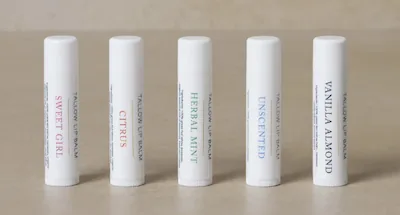
Best Non-Toxic Lip Balm in 2025


As an Amazon Associate, we earn from qualifying purchases. Our use of affiliate links does not influence how we rate products. Learn more about our affiliate policy here.
What we look for:
- Simple formulas with fully natural or safe synthetic ingredients
- No parabens, PEGs, phthalates, harsh sulfates, BHA/BHT, artificial dyes, formaldehyde or formaldehyde-releasing ingredients, or undisclosed synthetic fragrance (unless certified safe)
- Minimal, non-irritating preservatives
- EU-compliant brands with third-party certifications when available
- Full transparency around sourcing, ingredients, and manufacturing practices
Common Harmful Chemicals in Lip Balm
Chemical Name
Why it’s harmful
3-tert-Butyl-4-hydroxyanisole is a component of the food preservative Butylated Hydroxyanisole, used where Butylated hydroxytoluene is restricted. It serves as an oxidation inhibitor for human consumption. Despite lacking human studies, animal tests reveal no mutagenic activity. Its mutagenicity was evaluated using Salmonella typhimurium and Chinese hamster fibroblast cell line, with chromosomal aberrations induced only in the presence of the S9 mix.
BHT, a toluene-based ingredient, serves as a preservative in food and personal care products. Safety assessments have noted toxic effects in lung tissue when BHT was applied to rats' skin but considered the low concentrations in cosmetics safe. The American Conference of Governmental Industrial Hygienists (ACGIH) suggests moderate evidence of BHT being a respiratory irritant in humans.
2-Hydroxy-4-methoxybenzophenone (Benzophenone-3; BP-3) is a compound used as a UV absorber and stabilizer in plastics, paints, and sunscreens. Human studies have found photosensitivity to it, while non-human animal studies have found that high concentrations contribute to changes in liver weight and disruptions to reproductive parameters in mice and rats. It is identified as an endocrine-disrupting chemical and can affect the behavior of certain fish species. Despite this, it did not induce gene mutations in tests with the bacterium Salmonella typhimurium.
Butylparaben, a chemical used in various products, has been shown to cause skin irritation in humans and potential sensitization in dermatitis patients. Animal studies indicate that it has low to moderate oral toxicity and can cause damage to the liver, spleen, and thymus. It can also lead to cell proliferation in rats' stomachs, though it was not found to be carcinogenic or mutagenic. However, it may negatively impact sperm viability and activity, as demonstrated in different in vitro and in vivo studies. Lastly, it proposed weaker aquatic toxicity compared to parabens with longer alkyl chains, but still showed estrogenic effects in certain fish species.
Phthalates, linked to endocrine disruption, reproductive toxicity, and cancer, are banned in the European Union but remain prevalent in U.S. cosmetics. They are widely used in personal care products, such as nail polish, fragrances, and eyelash glue and other products. A significant loophole allows phthalates to be added to fragrances without disclosure. Health concerns include endocrine disruption, developmental and reproductive toxicity, and potential carcinogenicity.
Campaign for Safe Cosmetics: Phthalates, Product Profile: Hand Sanitizer, Phthalates in Cosmetics, Phthalates in cosmetic and personal care products: concentrations and possible dermal exposure, A Survey of Phthalates and Parabens in Personal Care Products from the United States and Its Implications for Human Exposure, Phthalates Factsheet, BPA and Phthalates: Chemicals found in our homes