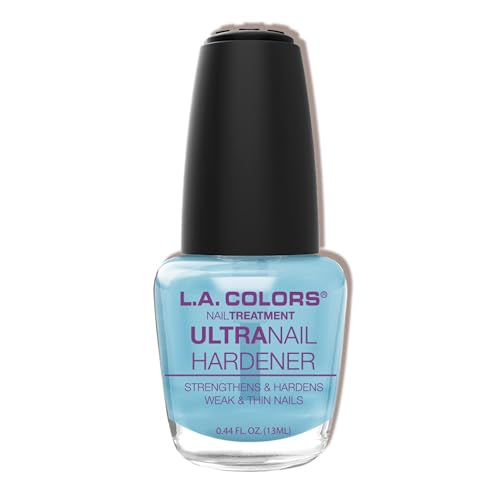
Best Non-Toxic Nail Hardener in 2025


As an Amazon Associate, we earn from qualifying purchases. Our use of affiliate links does not influence how we rate products. Learn more about our affiliate policy here.
What we look for:
- Free from formaldehyde, toluene, DBP, benzophenones, and other high-risk toxins
- No synthetic fragrance, unapproved dyes, or undisclosed ingredients
- “X-free” claims (like 10-free or 21-free) verified against the full ingredient list
- Third-party certifications when available
- Full transparency with every ingredient clearly listed
Common Harmful Chemicals in Nail Hardener
Chemical Name
Why it’s harmful
Formaldehyde is a colorless, flammable gas with a pungent smell that's naturally produced in small quantities in human bodies and is also known as methanal amongst other names. It's used in the production of various items such as fertilizers, paper, plywood, and urea-formaldehyde resins as well as in some foods and household products like antiseptics, medicines, and cosmetics. Exposure to formaldehyde, which can occur through breathing contaminated indoor air, tobacco smoke, or ambient urban air can lead to respiratory symptoms, irritation of the eyes, nose and throat and has been linked to lung and nasopharyngeal cancer as well as leukemia. The EPA considers formaldehyde a probable human carcinogen (Group B1) and inhaling it can cause bronchospasm and pulmonary edema. Commercially, it's sold as formalin in solutions of 37%, 44%, or 50% and long-term exposure can cause first-degree burns, skin sensitization, squamous cell nasal cancer, and chronic pulmonary obstruction.
Formaldehyde and Cancer Risk, Cleaning Products & Indoor Air Quality, No More Toxic Tub, Campaign for Safe Cosmetics: Preservatives, Campaign for Safe Cosmetics: Formaldehyde And Formaldehyde-Releasing Preservatives, Formaldehyde may be found in cosmetic products even when unlabelled, Formaldehyde Found in Popular American Beauty Products, Hair Salons - Formaldehyde in Your Products, Formaldehyde in cosmetic products
Acrylamide is a man-made white crystalline solid primarily used in the production of polymers and copolymers. In humans, it is toxic and irritates the skin and mucous membranes, and can affect the central, peripheral, and autonomic nervous systems leading to symptoms like memory difficulties, confusion, slurred speech, and excessive sweating. It may cause peripheral neuropathy, resulting in loss of sensation and muscle wasting. Recovery after exposure can take months to years. Animal studies indicate acrylamide accumulates in the nervous system, liver, kidney, and male reproductive system, causing degenerative changes. It might disrupt metabolism, induce oxidative stress, cause chromosomal aberrations, and tumor initiation. There is no evidence of teratogenic effects in humans or causing cancer. It has also shown genotoxic effects in some aquatic species like C. Auratus and mussels.
Triethanolamine appears to cause occupational asthma and allergic contact dermatitis in machinists and photographers, as well as liver and kidney damage in animals with high-dose feeding. It's noted to be an irritant to the skin, eyes, and respiratory tract, with potential to cause skin sensitization, though the rate of skin sensitization in humans is low. Triethanolamine has low acute toxicity, with median oral LD50 values of 4,190-11,260 mg/kg in rats and 5,300-8,000 mg/kg in guinea pigs, and a median dermal LD50 greater than 2,000 mg/kg in rabbits. Triethanolamine is not carcinogenic, developmental toxicant, or toxic to the reproductive system. However, chronic exposure may lead to liver and kidney damage.
Safety assessment of triethanolamine and triethanolamine-containing ingredients as used in cosmetics, Toxicology of mono-, di-, and triethanolamine, Campaign for Safe Cosmetics: Ethanolamine Compounds (MEA, DEA, TEA And Others), The Dirty Dozen: DEA-related ingredients, Chemical Profile, Special Chem, Safety assessment of triethanolamine and triethanolamine-containing ingredients as used in cosmetics
Phthalates, linked to endocrine disruption, reproductive toxicity, and cancer, are banned in the European Union but remain prevalent in U.S. cosmetics. They are widely used in personal care products, such as nail polish, fragrances, and eyelash glue and other products. A significant loophole allows phthalates to be added to fragrances without disclosure. Health concerns include endocrine disruption, developmental and reproductive toxicity, and potential carcinogenicity.
Campaign for Safe Cosmetics: Phthalates, Product Profile: Hand Sanitizer, Phthalates in Cosmetics, Phthalates in cosmetic and personal care products: concentrations and possible dermal exposure, A Survey of Phthalates and Parabens in Personal Care Products from the United States and Its Implications for Human Exposure, Phthalates Factsheet, BPA and Phthalates: Chemicals found in our homes
Toluene is a clear, colorless liquid that naturally occurs in crude oil and the tolu tree. It's prominent in the production of gasoline, coke from coal, and various consumer products like paints, adhesives, and nail polish. Toluene is even added to gasoline, used to create benzene, and acts as a solvent. However, exposure to toluene, especially from inhalation, can have serious health effects. It primarily targets the central nervous system, inducing symptoms like fatigue, nausea, headaches, and in chronic cases, can cause severe dysfunction. Exposure has also been linked to developmental effects in children, but there isn't enough evidence to conclude its carcinogenic potential. Abuse of toluene can cause permanent brain damage, liver injury, and even potential birth defects or increased risk of spontaneous abortions in pregnant women. Despite these risks, cognitive deficits from toluene exposure below a threshold limit value (TLV) of 50 ppm remain extremely low.
Benzophenone (BZP) is a photoinitiator, fragrance enhancer, and ultraviolet stabilizer, used in a variety of industrial applications. Despite not being registered as a pesticide in the U.S., it's involved in the production of insecticides and agricultural chemicals. Its toxic effects on humans are scarcely documented, but it presents little hormonal activity on cell lines. Animal studies show it possesses no estrogenic activity, but it can transform into derivatives with such activity under UV irradiation. It did not show reproductive toxicity or carcinogenicity in rats and mice, respectively, even at high doses. It can be bioactivated through specific enzymes. For aquatic life, fathead minnow larvae were more sensitive to BZP, ranking it in the middle of the toxicity order of six benzene derivatives.
Benzophenone & Related Compounds, Chemical Profile: Benzophenone, Toxicological evaluation of benzophenone, Benzophenone – information sheet, Proposition 65 Warnings: Benzophenone, OEHHA: Benzophenone, FDA Removes 7 Synthetic Flavoring Substances from Food Additives List, Benzophenone-3, a chemical UV-filter in cosmetics: is it really safe for children and pregnant women? ,